
Emerald Lakes Association
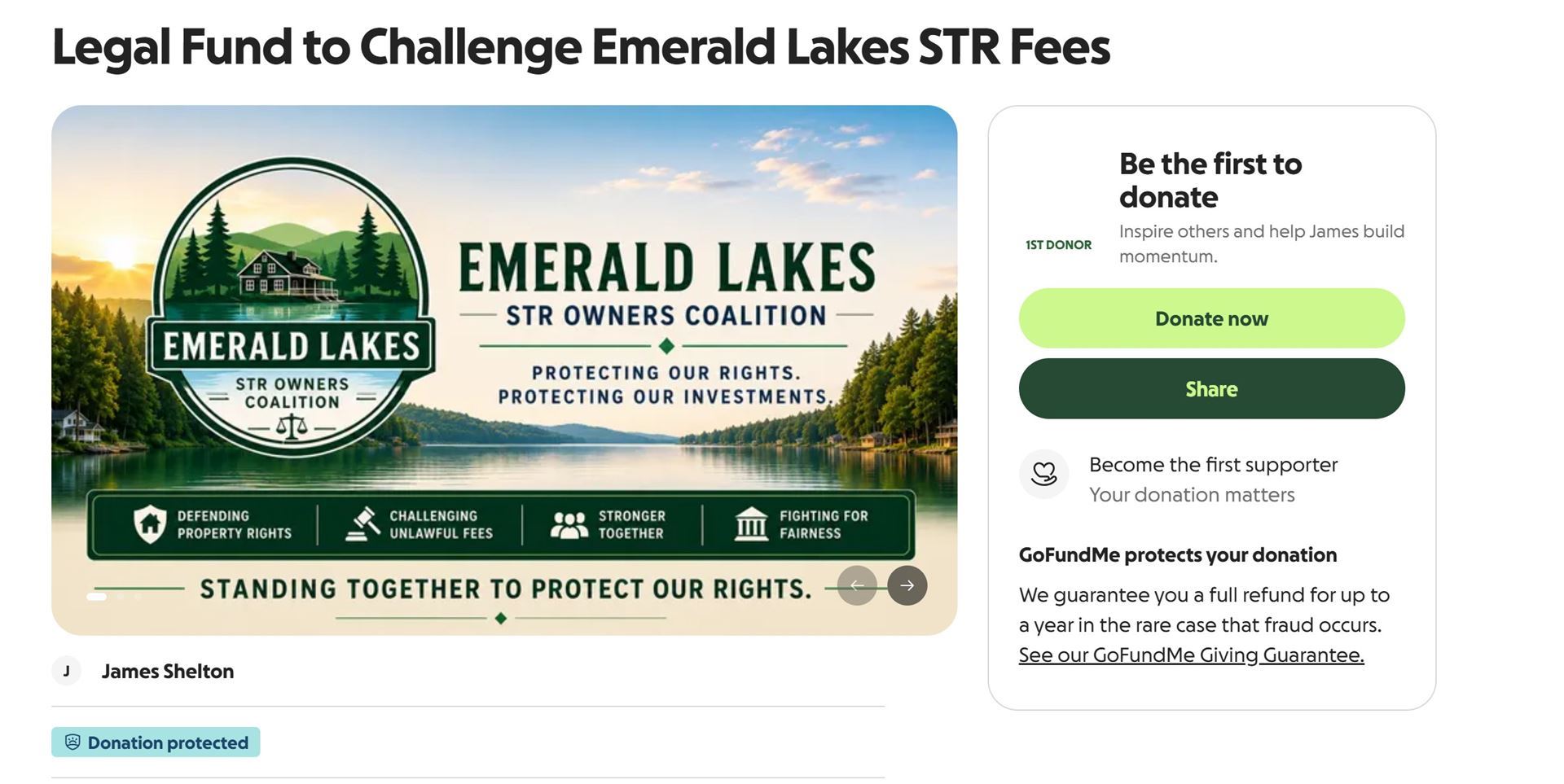
Emerald Lakes Association is imposing substantial additional fees on STR owners — on top of the regular annual dues every owner already pays. Owners are organizing to demand transparency, challenge unsupported fees, and protect property rights from being unfairly singled out.What HappenedAt Emerald Lakes, short-term rental owners are facing substantial fees and registration burdens that directly affect their property rights and rental income. Emerald Lakes Association (ELA) currently charges STR owners up to $2,800 per year — on top of the regular annual dues that all owners already pay. In March, ELA attempted to raise the highest tier by another $900, prompting significant owner pushback. Owners are charged a $200 late guest registration fee if guests aren't registered 24 hours in advance — yet the problem stems from ELA's own software. Owner-submitted guest info doesn't automatically transfer into the HOA's systems, forcing staff to re-enter it manually. That system effectively prevents owners from accepting legitimate last-minute bookings and exposes them to penalties for administrative timing issues. Owners have also reported unfair treatment and fines for honest mistakes and first-time issues rather than true misconduct or willful disregard of rules. Owners have also reported unfair treatment and fines for honest mistakes and first-time issues rather than true misconduct or willful disregard of the rules. Why This MattersThe Emerald Lakes STR Owners Coalition believes these fees are excessive, unsupported, and not authorized by the Association's governing documents or Pennsylvania law. What begins as one community's action can quickly spread across the region — threatening property rights, businesses, and the local jobs supported by short-term rentals. The Poconos VRO ResponseThe Poconos VRO has a plan to Fight Back.
How You Can Help
Why Your Support MattersThis isn't just an Emerald Lakes issue. If left unchallenged, other HOAs across the Poconos may see this as an opening to adopt similar measures targeting short-term rental owners. What begins as one community's action can quickly spread across the region — threatening property rights, businesses, and the local jobs supported by short-term rentals.
|
| Address Poconos Association of Vacation Rental Owners
Contact info@PoconosVRO.org
Follow Us | Quick Nav
Legal
© 2026. Poconos Association of Vacation Rental Owners is a 501(c)6 non-profit organization. |


